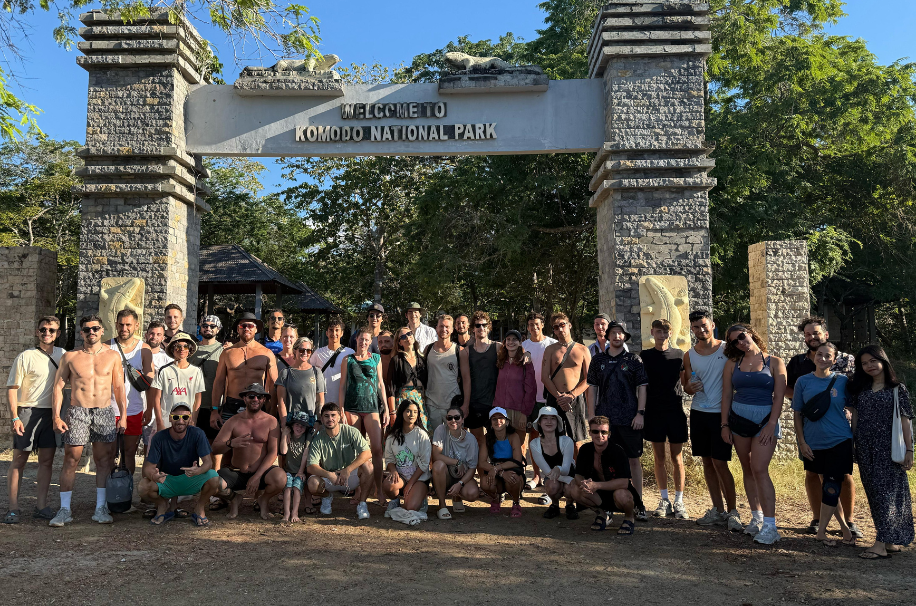
Bali is often the definitive starting point for travelers visiting Indonesia, but the country’s vast eastern archipelago holds some of the most dramatic landscapes, richest marine life, and unique wildlife on the planet. At the absolute top of most international bucket lists is Komodo National Park a UNESCO World Heritage site and the only place in the world where you can see Komodo Dragons (Varanus komodoensis) roaming completely free in their natural habitat. For travelers looking to cross the ocean directly from the Island of the Gods to the Land of the Dragons this year, the optimized Bali to Komodo Island Sailing Route 2026 offers an extraordinary, comprehensive maritime journey that turns your transit into an unforgettable slow-travel adventure. Here is a detailed, unbiased guide on what to expect, how the route connects the islands, and how to plan your sailing itinerary effectively.
For travelers who prefer a slow travel philosophy, love the open ocean, and want to avoid the hassle of domestic airports altogether, traveling entirely by water is a unique alternative. This choice turns the transit itself into a major part of the holiday experience, allowing you to watch the Indonesian landscape change gradually from the lush, volcanic peaks of Bali to the dry, dramatic, savannah-like islands of the East Nusa Tenggara region. When exploring the Bali to Komodo Island Sailing Route 2026, you will find several major advantages:
The Transit Experience: This route is designed for those who aren’t in a rush. It connects the ports of Bali directly to the waters surrounding the Komodo National Park, bypassing the need to arrange multiple land transfers or independent flights.
Geographical Transition: As you sail eastward through the Lombok Strait and beyond, you cross the famous Wallace Line a faunal boundary line that marks the transition between Asian and Australian ecozones. You will notice the climate becoming noticeably drier and the islands taking on a more rugged, prehistoric appearance.
Who It Is For: This is best suited for maritime enthusiasts, long-term travelers, and anyone looking for a comprehensive sea expedition across the Lesser Sunda Islands.
While sailing directly from Bali is a popular choice, many travelers prefer to break the long journey into two distinct phases by stopping along the way. A common strategy is to take a standard fast boat from Bali over to the Gili Islands or mainland Lombok first to enjoy local highlights like surfing in Kuta Lombok or hiking Mount Rinjani.
Once you have finished exploring Lombok, you can transition seamlessly back into your ocean expedition by booking the classic Lombok to Labuan Bajo.
This route acts as the second leg of your Bali to Komodo journey, typically spanning 4 days and 3 nights on a liveaboard vessel. It covers incredible highlights along the Sumbawa coastline, including Moyo Island and Satonda Island, before dropping you directly into the core zones of Komodo National Park to experience:
Travel logistics do not always have to move in one direction. If you decide to take a quick domestic flight from Bali straight into Labuan Bajo (the gateway harbor town on Flores Island) to see the dragons first, you can turn your return journey into a scenic sea voyage. Instead of booking a return flight, you can opt to travel west via the Labuan Bajo to Lombok. This specific Labuan Bajo to Lombok sailing route covers the exact same geographical highlights as the eastbound trip but in the opposite direction. Once the cruise concludes on the shores of Lombok, you can easily jump on a standard morning or afternoon fast boat to bring you right back to Bali, completing a full, beautiful loop of the region.
When embarking on a comprehensive cruise from the west toward the east, your vessel will cross multiple distinct marine territories. Understanding the geography helps travelers prepare for the shifting environments.
The journey maps out through several critical oceanic checkpoints:
While seeing the world’s largest lizards on Komodo Island is the main event, the entire route through the archipelago is a paradise for biodiversity. The underwater world is just as spectacular as the rugged landscapes above. As you navigate the regional waters, keep an eye out for these incredible species:
Your experience on the water will heavily depend on the type of boat you choose for your journey. The maritime industry in Indonesia offers options tailored to different budgets and comfort levels. Here is a breakdown of the typical vessels operating across these waters:
Posted on Google
 Bouasker Chaouki
Trustindex verifies that the original source of the review is Google.
Good and professional team Kind staff and nice pricePosted on Google Arun A.RGreat Snorkelling experience with them. We booked an early morning private boat snorkelling trip and we had an amazing two hours. Will recommend them to others for sure!!!Posted on Google
 Kendall LlamedoWe had a wonderful experience with Baligili Fast Boat. The booking process was smooth, and everything was well organized from start to finish. A special thank you to Yopi and Fabricio for their outstanding service. They were incredibly friendly, helpful, and professional. They even helped carry our luggage all the way to the port, which was such a thoughtful gesture and made our trip much easier. Their kindness and attention to customers truly stood out. We highly recommend Baligili Fast Boat and would definitely use their service again on our next trip to Gili Islands. Thank you, Yopi and Fabricio, for making our journey comfortable and stress-free! 🙏😊🌴🚤Posted on Google
 Daniele RussoAbbiamo fatto due escursioni con questa compagnia durante la nostra luna di miele. Nostro accompagnatore è stato Yopi, una giovane guida indonesiana che possiede una maturità, una gentilezza e una professionalità davvero rare per la sua età. Lavora con Baligi Fast Boat ed è stato il nostro accompagnatore personale durante una meravigliosa escursione alle Gili Segrete di Lombok: Gili Nanggu, Gili Sudak e Gili Kedis. L’organizzazione del tour è stata impeccabile. Siamo partiti da Gili Trawangan in fast boat verso Lombok, abbiamo proseguito in auto fino al porto e da lì siamo saliti su una tipica imbarcazione locale per raggiungere queste piccole isole paradisiache. Yopi ha gestito perfettamente tutti i tempi della giornata, permettendoci di vivere ogni momento senza fretta e senza stress. Lo snorkeling è stato eccezionale: attrezzatura inclusa, fondali ricchi di coralli colorati e un bravissimo nuotatore dotato di GoPro che ci ha ripresi durante le immersioni, regalandoci ricordi indimenticabili. Abbiamo potuto ammirare un mare cristallino, pesci tropicali e la pace assoluta di luoghi ancora autentici e poco affollati. Il giorno successivo Yopi ci ha accompagnati nuovamente nel tour delle Gili più conosciute. Anche in quell’occasione si è dimostrato estremamente professionale, attento, disponibile e premuroso con tutti i partecipanti, ma sempre capace di farci sentire speciali. Oggi siamo ancora in contatto con lui perché, oltre a essere stata una guida eccezionale, è diventato un amico. È stato un vero onore condividere con Yopi una parte così speciale del nostro viaggio.Posted on Google
 Elias jebaru
Trustindex verifies that the original source of the review is Google.
Unforgetable snorkling dan fastboat experiences, recomend to everyone😘👌👌👌Posted on Google Faril SaputraPengalaman yang sangat seru selama perjalananPosted on Google
 Farin PokdalNice staffPosted on Google
 Romi JunaidiThe best agentPosted on Google
 Hugo NabiPelayanan terbaik untuk fastboat Gili ke bali
WhatsApp us
 English
  Bahasa Indonesia
  Français
  한국어
한국어